Wednesday, May 31, 2023

A ‘gender-sensitive’ Hebrew Bible translation hit digital shelves - The Jerusalem Post - Translation

A new Biblical translation that eschews gendered pronouns for God is now available through Sefaria, the online library of Jewish texts, prompting backlash on social media from some who see the change as a sacrilege.

The Revised Jewish Publication Society edition of the Bible, which the 135-year-old Jewish publishing house has released in partnership with Sefaria, is the first major update to the JPS translation of the Tanakh in nearly 40 years. So far, only the books comprising the Prophets, the Hebrew Bible’s second section, are available on Sefaria.

The new English translation refers to individuals with pronouns that are consistent with traditional gender norms. But unlike nearly all translations of the Bible throughout history, the new edition, known as RJPS, does not refer to God with masculine pronouns. It doesn’t use feminine pronouns either: Instead, God is referred to simply as “God” throughout the text.

For example, Isaiah 55:6 reads, “Seek GOD while you can, Call out while [God] is near.” JPS’ landmark 1985 translation, by contrast, reads, “Seek the LORD while He can be found, Call to Him while He is near.”

Taking changes of language and understanding into account

“The RJPS makes the case that the art of Bible translation is always a work in progress, and should take into account not only our deeper understanding today of biblical Hebrew but also the significant changes that have occurred in the use of English over the past decades,” said JPS’ director emeritus, Rabbi Barry Schwartz, in the announcement for the new translation of the Bible, which is called the Tanakh in Hebrew.
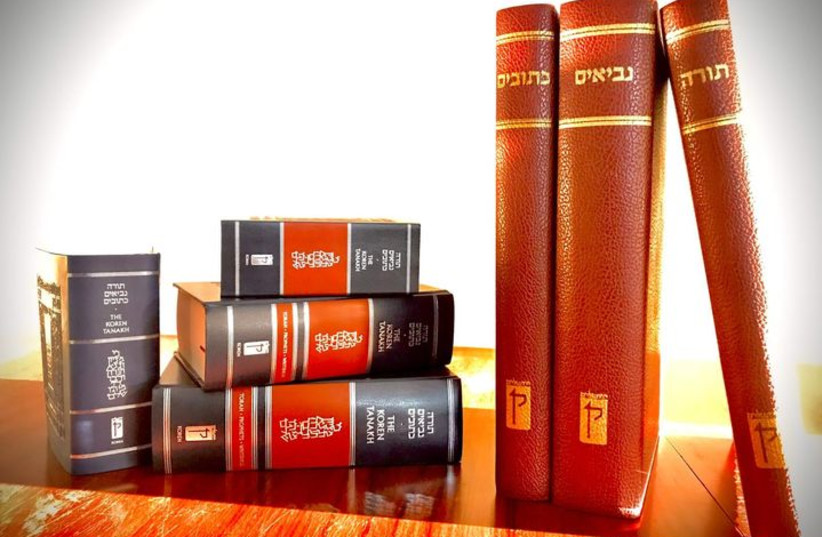
KOREN TANAKH, different versions. (credit: Courtesy Koren Publishers)KOREN TANAKH, different versions. (credit: Courtesy Koren Publishers)

“Tanakh is the foundational text of the Jewish people, and we share Sefaria’s desire for everyone to be able to access it in language that is appropriate and meaningful for them while remaining faithful to the original,” Schwartz added.

The lack of divine pronouns in the RJPS translation comes as non-traditional pronouns — and debate over their use — have become increasingly prevalent in public discourse. A 2021 study by the Pew Research Center found that more than a quarter of American adults know someone who uses gender-neutral pronouns, up eight percentage points since 2018. Meanwhile, many conservatives have decried the use of gender-neutral pronouns, and multiple Republican-led states have passed laws effectively permitting educators to refuse to use the pronouns their students prefer.

The RJPS translation, one of at least 12 available through Sefaria, has sparked backlash online from some Orthodox Jews who believe the new translation is not aligned with their values. Arguing that the translation is an example of progressive political ideology seeping into religion, some have said they will stop using the app over the RJPS translation.

Yehiel Kalish, the CEO of Jewish ambulance corps Chevra Hatzalah, announced last week via Twitter that he had deleted the app. Other prominent figures in the Orthodox world also condemned the new translation.

“Sefaria is a tremendous resource for the [world of] Torah,” tweeted Yochonon Donn, news editor of Mishpacha Magazine, which reaches a haredi Orthodox audience. “Messing around with [holy books] to conform to western ideas of equality is an unacceptable breach. If this is true, I can’t see people learning from an unholy source.”

Rabbi Yaakov Menken, managing director of the Coalition for Jewish Values, a right-wing Orthodox political advocacy organization, tweeted that “to be more inclusive of atheists, they’ll provide a ‘historically accurate translation’ that avoids mention of the Supreme Being. ‘In the beginning, heaven and earth were created.’”

Sefaria has always featured texts relevant to Jews with a range of approaches — a spectrum that has only widened as the digital library has added (and begun supporting the creation of) contemporary texts and translations.

Publishing the RJPS is “about having different translations that are available,” said Sara Wolkenfeld, Sefaria’s chief learning officer. (Sefaria’s CEO, Daniel Septimus, is on the board of 70 Faces Media, the Jewish Telegraphic Agency’s parent organization.)

“We are always working to include Jewish texts that are studied by the full range of Jewish learners,” she said. “And that’s why we chose to include the newest JPS translation, but among the many other translations that we’ve already hosted in the library.”

Sefaria also has translations from Orthodox-geared publishing houses, such as the Koren and Metsudah versions, and even translations into French and German. Users can select their own preferred English translation, and RJPS is not the default translation for the Book of Prophets.

“People should know that Sefaria is a library for the entire Jewish people,” Wolkenfeld said. “And our mission is to provide access to Torah and to bring Torah into the digital age. That’s really what we’re aiming for.”


Adblock test (Why?)

Tuesday, May 30, 2023

Gallivant. According to Websters Dictionary, the definition is to travel ... - Specialty Food Association - Dictionary

Gallivant® Mawa Ice Cream is a craft, small-batch, made-in-Texas ice cream company that specializes in unique ingredients and flavors. The brand was founded by Snehee Chaplot, who was inspired to create Gallivant Mawa Ice Cream after having a personal health scare.  She discovered she had a medical condition that resulted in her developing a gluten allergy and sensitivity to dairy and eggs. Being a vegetarian, she relied heavily on dairy to gain nourishment but was unable to consume 'normal’ organic dairy products. So she began her journey into understanding why dairy was hurting her and what can she do to 'reverse' this sensitivity. She started learning about and adopting Ayurvedic practices that could help her body 'heal' and once again accept dairy.

Chaplot is a Food Safety Scientist with over 15 years of experience ranging between research and development, commercialization and manufacturing. She was born in Bahrain (Middle East) to Indian parents and moved to the United States in 2007 to complete her graduate studies in Food Sciences and Technology at the University of Minnesota, Twin Cities.

In 2018, she dabbled with a favorite dessert, ice cream, and created a version that not only tasted like the ice creams of India, but also did not aggravate her dairy sensitivity. After 18 months of testing, she launched Gallivant Mawa Ice Creams in unique and authentic global flavor profiles appealing to diverse tastes. 

Gallivant Mawa Ice Creams are the FIRST and ONLY Indian-style mawa ice creams sold in retail markets in North America. The ice creams are made using Ayurvedic principles of Dairy Processing where milk and mawa (Indian Milk Solids) are cooked together at 175°F for more than 3 hours compared to the traditional process that ran for 30 minutes at 165°F. The ‘cooking’ process is known to help in the reduction of the 'harming' properties of milk that elevate lactose intolerance.  The Ayurvedic philosophy is to make sure the cow has fed her babies to her satisfaction, the grasses they graze on are healthy, natural and holistic in nature and contain good minerals and finally, that they are not in any discomfort, pain, fear, etc.   In short, they are able to express themselves as natural beings. This ensures that the residual milk that is utilized for the Gallivant products is from a cow that is calm and stress-free and thereby a HAPPY HEALTHY COW.

An additional and delicious benefit, the ‘cooking’ process results in an ice cream that has a buttery-rich caramelized texture with half the amount of fat as an American premium ice cream.  

Today, these ice creams are available in ten unique and authentic diverse flavors including Chinese Black Sesame, Thai Coconut, Japanese Matcha, Spanish Saffron, Guatemalan Cardamom, Vietnamese Coffee and more across Texas and Southern California.

What makes Gallivant ice creams unique:

  • It uses Mawa, traditional Indian milk solids, mawa, as a base. This gives the ice cream a unique flavor and texture that is not found in other ice creams.
  • It is made with honest ingredients from around the world. This results in a high-quality ice cream that is both delicious and authentic.
  • It is made in small batches. This allows the company to carefully control the quality of its ice cream and to experiment with new flavors.
  • It is available in a variety of unique flavors. This makes it a great option for people who are looking for something different.  It is also egg, peanut and gluten-free.
  • The product is created with the cows and earth in mind to create the most ethically and eco-friendly based end result possible.

AWARDS

First Place Winner in the Texas Department of Agriculture’s ‘Best Food Product in Texas’ Awards

First Runner Up  2020 Texas Works Awards 

FIND US

Summer Fancy Food Show 2023 

June 25-27, 2023

Booth no. 6335

Go Texan Expo 2023

June 21-24, 2023

Booth no. Market Hall - 6208

IFT 2023

July 16-19, 2023

Booth no. S3471L

Adblock test (Why?)

Russian-Speaking Airmen Translate Rare Account of Ukraine War Through Invader's Eyes - Air & Space Forces Magazine - Translation

“Half of my guys changed clothes and wore Ukrainian uniforms because they were of higher quality and more comfortable. … Our great country was unable to clothe, equip, and feed its own army.”

Those are among the opening lines of a harrowing 77-page account from Russian paratrooper Pavel Filatyev, describing his part in the 2022 invasion of Ukraine—and now available to read in English thanks to five Russian-speaking Airmen who translated the text on behalf of the Air Force Culture and Language Center (AFCLC).

The full blog—titled “Zov,” a term that means “Calling” in English—made headlines in August after appearing on the Russian social media website Vkontakte. Though Russian soldiers had previously posted photos and videos of the war to social media, Filatyev’s blog was one of the first longform accounts to appear in public.

“I cannot remain silent,” wrote Filatyev, who later fled Russia for political asylum in France.

Airmen and the rest of America can now read the whole document on the U.S. Air Force’s Air University website. And while it may be impossible to verify all of the details in Filatyev’s account, his writing offers a rare glimpse of what went wrong in the Russian invasion.

Specifically for U.S. service members and leaders, “Zov” provides insight into how Ukrainian forces have been able to defy the odds and blunt the effects of a larger, technologically superior Russian military, one of the USAF translators told Air & Space Forces Magazine.

“Before the invasion started, everybody was reporting that Ukraine would fall within weeks, and that clearly hasn’t happened,” Capt. Roman Obolonskiy said. “Now we have to go back and figure out what within our military intelligence community and analysis failed to predict this outcome.”

While military planners could estimate the number of Russian resources like tanks, troops, and planes, accounts like “Zov” shed light on intangible factors such as morale, motivation, and training.

“Is what’s on paper real? The writer would tell us, ‘Hey we were not issued the things we thought we would be issued,’” Obolonskiy said. “‘We did not have sleeping bags or winter clothing and we had rusty weapons that were out of sight.’ Having 200 rifles is great, but not if none of your 200 rifles can shoot straight.”

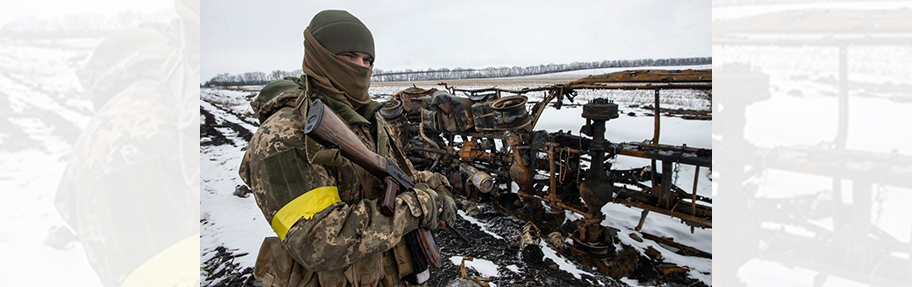
A destroyed Russian tank at an undisclosed location in Ukraine on Oct. 2, 2022. Ukraine Ministry of Defense/Facebook

Challenges of Translation

Like his four co-translators, Obolonskiy is a member of the Language-Enabled Airman Program, an initiative within AFCLC where Airmen and Space Force Guardians who have significant experience in a foreign language can apply to serve as cultural and linguistic experts for their fellow service members.

The team of Airmen, which included Maj. Herman Reinhold, Capt. Mikhail Berlin, Capt. Abror Samatov,, and Master Sgt. Nadia Wolfe, read “Zov” the entire way through, split it into sections, assigned one Airman to each section, then worked together to ensure consistency throughout the translation. It was a difficult task: Filatyev wrote in a stream-of-consciousness style filled with military jargon, typos, and colloquial expressions that do not translate perfectly into English. 

“It was the use of language I found particularly interesting,” Reinhold said. “It is kind of a puzzle: how do I translate the F-word in Russian into English in a way that is understandable to the reader. I may or may not use the exact F-word equivalent. Maybe I’ll use different curse words to convey the meaning.”

Indeed, David Remnick, the editor of The New Yorker and a fluent Russian speaker, wrote in 2014 there are thousands of variations on the four curse words that make up the backbone of Russian profanity. Besides profanity, the LEAP scholars also had to use their best judgment to translate colloquial or military terms.

“Some of the military jargon, slang, wordplay, and colloquial expressions would not make sense in English if translated verbatim,” said Berlin. “It was a fun challenge to find a creative way to convey the exact same meaning and find similar phrases that would be used in English.”

Lessons for the US

When the translation was complete, it provided firsthand perspective of what many analysts had seen from a distance: The Russian war effort has been hampered by poor logistics, communication, and leadership. “Zov” illustrates how those issues affect frontline troops.

“Who will be accountable for these lives lost and the wounded?” Filatyev wrote about a suspected incident of friendly fire. “After all, the reason for their deaths was not the professionalism of the Ukrainian army, but the mess in ours.”

The shortage of medical supplies and other equipment that Filatyev experienced reminded Wolfe, a medical logistics flight chief, just how important her work is to the larger U.S. military.

“In medical logistics, we do our job day to day and we do not necessarily see the outcome,” she said. “‘Zov’ brings the importance of what we do to light and is an example that I can use to motivate my people.”

Filatyev’s memoir also showed the impact a corps of noncommissioned officers, or lack thereof, can have on a battlefield. 

“There is a very large separation between officers and enlisted,” said Wolfe. “It was almost like they are not even working on the same side.” 

Obolonskiy came away with a greater appreciation for corruption in the Russian military and political system, which may have contributed to the dysfunction at the front.

“We’ve always known about corruption within Russia, but I don’t think we comprehended what that meant,” he said. “Throughout reading this, from start to finish, every link in their chains of supply, appropriations, and logistics was impacted by a level of corruption where people were just stealing everything that they needed for the war effort.”

A Ukrainian army soldier stands near the wreckage of a Russian vehicle at an undisclosed location on March 8, 2022. General Staff of the Army of Ukraine/Twitter

More Understanding

Despite Filatyev’s criticisms of the war and the Russian military, the paratrooper declares: “I’m not a coward! I’m a patriot! … I feel sorry for the Ukrainians, a fraternal nation to me! But even more, I feel sorry for the used Russian people and the nations of the great USSR, whose people were exploited by others, more unscrupulous individuals. Who are currently destroying the largest and the greatest country in the world!”

Filatyev may have witnessed war crimes firsthand. In March, Radio Free Europe/Radio Liberty alleged the paratrooper said he was aware some Ukrainians captured by his unit would later be executed. In ‘Zov,’ he wrote that he did not witness any acts of torture or rape, though he saw at least one mutilated dead body. The paratrooper expressed guilt for participating in what he felt was an unjustified invasion.

In writing “Zov,” he may have “tried to do something that would clear his conscience,” Wolfe said.

In reading the document, Americans must remember Filatyev’s experience may not reflect that of the entire Russian military, Reinhold said. “Zov” is a primary source document, and other sources are needed for a more holistic picture of the conflict. With those limitations in mind, Filatyev’s account could serve as a reminder that an army’s strength on paper may not hold up on the battlefield. 

“There is an opportunity to try and figure out how we can re-analyze other adversaries,” said Obolonskiy.  “Are we focusing on the right things when we try to calculate how capable a foreign military is?”

That mindset applies not only to adversaries, but also to allies, partners, and the U.S. itself.

“We need to look in the mirror as well and see what of this applies to us,” Obolonskiy said. “Do we provide the correct training, or are we boggled as well? Do we provide the proper equipment or do we also have five guns at a base of a thousand?”

Adblock test (Why?)

Monday, May 29, 2023

'Webster's Bitch' plays with words and their ever-changing meanings at Playhouse on Park - Hartford Courant - Dictionary

When Jacqueline Bircher had questions about the power of words — how they can enlighten, enrage, torment and amuse — she went not just to the dictionary but to the place where dictionaries are made.

Her new play, “Webster’s Bitch,” is premiering at West Hartford’s Playhouse on Park May 31 through June 18. In the play, it comes to the attention of staffers at a dictionary office that their editor-in-chief has called a colleague the B-word. There is evidence of the offense on social media. The office workers discuss the issue as only lexicographers can. They discuss the power that words have to distress people and list other, similarly offensive words.

They also argue about how some words are forbidden and why. One of them declares “Language isn’t fair. It’s a made-up human puzzle that is constantly changing. This is the whole reason our jobs even exist, so someone can take an active role in debating the intricacies of reclaimed slurs and ensuring that our current definitions are, in fact, current.” The dialogue veers from scholarly to excitable.

“I wrote this play to pose more questions than answers,” Bircher said. She wanted to dramatize how vital and lively words (and their definitions) can be.

“I never worked at a dictionary, unfortunately, but I was always interested in words,” the playwright said. She had heard Kory Stamper, the author of “Word by Word: The Secret Life of Dictionaries” on a podcast and realized that “Dictionaries are so different from what I have always imagined them to be. It’s not stuffy what happens in those offices. It’s anthropological, socioeconomical. It’s about language as it changes in real-time. It’s unexpected. We wouldn’t think we’d be talking about slurs and hate speech at the office like that.”

“Webster’s Bitch” is set in an office building in Stamford. There really is no major dictionary publisher in Stamford. Bircher’s fictional company evokes Merriam-Webster, which is based in Springfield, Massachusetts. “The dictionary is my play is a generic stand-in for Webster’s,” she said. What she wanted to convey was how passionate lexicographers can be, and how lively their conversation gets.

The play began as a one-act around five years ago. It had some success in that form and was scheduled for development into a longer play but that process was complicated by the COVID pandemic. Bircher hasn’t updated the script to reflect such post-COVID realities as working at home or reorganizing office space or wearing masks. “It’s generally meant to take place at a time in the near past,” she said, “not any particular year or time. It’s a place where COVID doesn’t exist.”

Playhouse on Park is hosting the world premiere of the full-length version of “Webster’s Bitch.” The theater held a staged reading of the script last year, which encouraged them to go ahead with a full production. Some of the cast and creative team were involved with the reading. Director Vanessa Morosco directed the one-act as well as the playhouse reading. “It’s amazing to see this come full circle,” Bircher said.

The Playhouse on Park production stars Isabel Monk Cade, who appeared in the one-act version of the play when it was at the Vineyard Theatre in New York as part of the Samuel French Off Off Broadway Short Play Festival in 2019. Also in the cast are Hanjie Chow, Peter Simon Hilton, Mia Wurgaft and Veanne Cox. Cox, who also took part in the “Webster’s Bitch” reading, co-starred in the impressive COVID-themed virtual adaptation of Noel Coward’s “Private Lives,” and “Elyot & Amanda: All Alone,” which the playhouse aired in 2021.

Bircher has stayed involved with the production, visiting West Hartford several times from New York City. She will be there for talkbacks following the Sunday matinees throughout the run.

Turning a one-act into a full-length is “one of my favorite things to do,” the playwright said. “It becomes much more complicated.”

Having to revise the play at a time when readings and rehearsals were more likely to be held over Zoom than on a stage had its difficulties. “The trickiest thing to work out was the rhythm and the comedy. I’m lucky because it has already been a short play,” Bircher said. She’s done very few rewrites at the playhouse.

The new version already has a future. It won the Woodward/Newman Award presented by the Constellation Stage company in Bloomington, Indiana and will get a full production there in 2024.

“Webster’s Bitch” runs May 31 through June 18 at Playhouse on Park, 244 Park Road, West Hartford. Performances are Tuesdays at 2 p.m., Wednesdays and Thursdays at 7:30 p.m., Fridays at 8 p.m., Saturdays at 2 and 8 p.m. and Sundays at 2 p.m. $25-$42.50. playhouseonpark.org.

Adblock test (Why?)

Korean literature in translation enjoys growing universal appeal - 코리아타임스 - Translation

From left, book cover of 'Whale,' 'Violets' and 'Love in the Big City' / Courtesy of Literature Translation Institute of Korea
From left, book cover of "Whale," "Violets" and "Love in the Big City" / Courtesy of Literature Translation Institute of Korea

By Kwak Yeon-soo

As Korean literature in translation continues to reach more international readers, Korean authors are achieving a growing presence in the global publishing market. So far, a total of eight novels have been nominated for prestigious literary awards this year.

Although it missed out on the 2023 International Booker Prize, novelist-director Cheon Myeong-kwan's "Whale," translated by Kim Chi-young, was shortlisted for the British literary award. He is the third Korean writer to be shortlisted for the award following "The Vegetarian" and "The White Book" author Han Kang, who was selected in 2016 and 2018, and "Cursed Bunny" author Bora Chung, who was selected last year.

"Whale," a multi-generational tale that sheds light on growth and modernization in Korea after the 1950-53 Korean War, is set to be translated into several languages.

The U.K. edition was released in January while the U.S. version was dropped in May. The novel was published in other languages, including German, Russian, Japanese and Turkish, with assistance from the Literature Translation Institute of Korea (LTI Korea).

"In recent years, there's been an uptick in the number of Korean novels translated into foreign languages, and the literary world has taken note with Han Kang receiving the International Booker Prize in 2016 for her novel 'The Vegetarian,'" an LTI Korea official said.

"Modern Family," also by Cheon, will be published into six languages including English, French, Russian, Chinese, Mongolian and Romanian.

Novelist Park Sang-young's "Love in the Big City," which was longlisted for the 2022 International Booker Prize, has also been longlisted for the 2023 Dublin Literary Award. This year's prize went to German author Katja Oskamp and translator Jo Heinrich.

Shin Kyung-sook's "Violets" was longlisted for the 2022 National Book Critics Circle Awards and also shortlisted in the fiction category for 2023 Firecracker Awards, which will announce the winners on June 22. Both Park and Shin's novels were translated into English by Anton Hur.

In Russia, a Russian version of "Summer Outside" by Kim Ae-ran and "Sweet Violence" by Jeong Yi-hyun were nominated for the Yasnaya Polyana Literary Award. The winners will be announced in October.

In Japan, a local translation of "Becoming Cyborg" penned by Kim Cho-yeop and "Prism" by Sohn Won-pyung were each nominated for the Japanese Translation Award and Japanese Booksellers' Awards in the category of translated fiction novel.

"The Hellbound," the comic series that was adapted into a 2021 Netflix series, has been nominated for a Will Eisner Comic Industry Award, one of the most prestigious awards in the comics industry.

"The Hellbound Volume 1-2" by Yeon Sang-ho and Choi Gyu-seok, translated into English by Danny Lim, was nominated in the category of Best U.S. Edition of International Material. The winners will be announced on July 21.

"The hard work of Korean authors and dedication of translators give Korean literature a growing universal appeal," the LTI Korea official said.

Adblock test (Why?)

The First 10 Words of the African American English Dictionary Are In - The Philadelphia Tribune - Dictionary

[unable to retrieve full-text content]

The First 10 Words of the African American English Dictionary Are In  The Philadelphia Tribune

Sunday, May 28, 2023

Barcelona loanee hits out at media for ‘incorrect translation’: “Call me if you need help” - Barca Universal - Translation

Barcelona defender Samuel Umtiti has hit out at media outlets after an incorrect translation of his interview, which many translated as he felt ‘imprisoned at Barça for four years’.

“To all journalists and newspapers… If you need help translating, you can call me next time. Depression equals depression, nothing to do with “prison” or jail. Thank you very much,” wrote the defender on his Instagram account (h/t Mundo Deportivo).

The exit-bound Barcelona defender recently spoke with Canal+ where he talked about his frustration at Barcelona, saying that the last four years were very difficult for him.

“I’m fine. I’ve spent four years in the Galleys, they’ve been hard four years, but now I’ve rediscovered my smile and the joy of playing football. They have given me this confidence here and I’ve been able to express myself as I did years ago,” said the defender.

“I don’t know if it was depression, but it was really complicated and difficult at all levels. I closed myself off a lot with my close people.” 

“There were times in Barcelona when I didn’t want to leave the house. My friends told me to go out to change my mind, but I told them no, that I wanted to be alone. It was very complicated,” said the defender, who in no way described his Barcelona tenure as a prison.

Umtiti moved to Serie A outfit Lecce on loan at the beginning of the ongoing season. Ever since moving to Italy, the French defender has found a new life and is one of their top performers of the season. 

As a result, the Serie A team is now exploring the possibility of signing the defender on a permanent transfer while there are other reports that he wants to move back to Olympique Lyon.

In any way, it is certain that Umtiti has no place in the current Barcelona team and despite his emotional comeback from mental trauma, he will be sold in the summer.

Adblock test (Why?)