Saturday, April 15, 2023

Researcher Discovers Fragment of 1750-Year-Old Translation of Gospel of Matthew - Faithwire - Translation

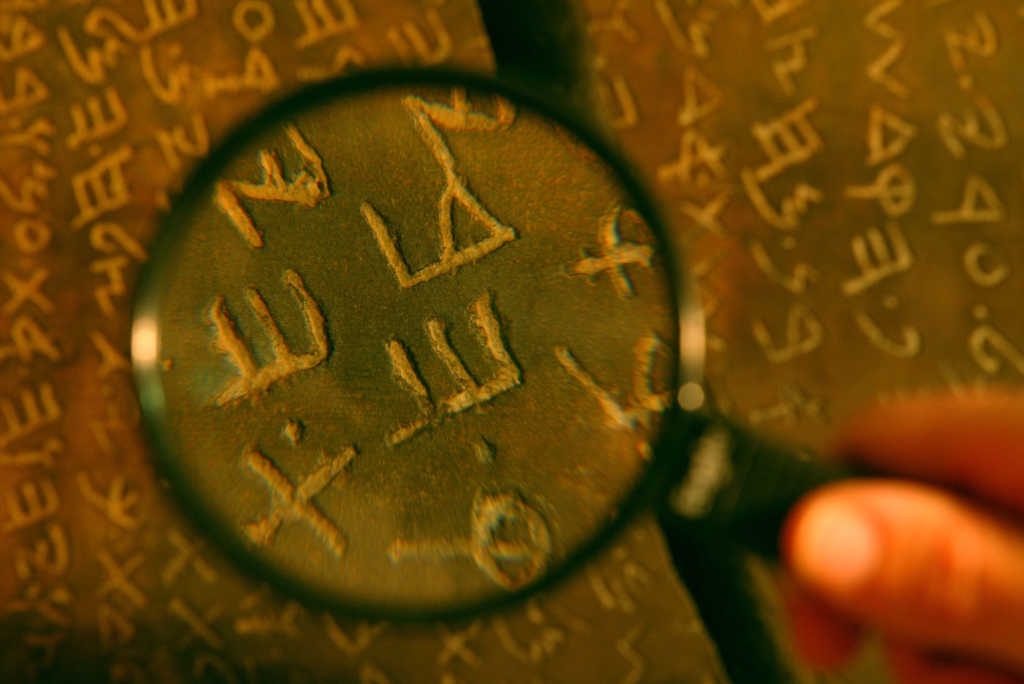
A researcher at the Austrian Academy of Sciences has discovered what scientists say is a fragment of the oldest writing of the text of Matthew from the Bible’s New Testament. 

The biblical text had been hidden underneath other writing on an ancient piece of parchment. 

“About 1,300 years ago a scribe in Palestine took a book of the Gospels inscribed with a Syriac text and erased it. Parchment was scarce in the desert in the Middle Ages, so manuscripts were often erased and reused,” the academy, also known as OeAW or Österreichische Akademie der Wissenschaften, explained in a recent post on its website. 

Listen to the latest episode of CBN’s Quick Start podcast 👇

Medievalist Grigory Kessel, one of the members of the OeAW research team, used ultraviolet photography to reveal the ancient transcription which was located underneath three layers of text. The layered manuscript, a so-called palimpsest, is now legible again using modern technology. 

It turns out Kessel discovered one of the earliest translations of the Gospels, made in the 3rd century and copied in the 6th century, on individual surviving pages of this manuscript, the OeAW said. 

The team’s study announcing the find was published last month in the journal New Testament Studies.  The study includes the translation of Matthew 11:30 to Matthew 12: 26 that originally translated into the Old Syriac translations more than a millennium ago.  

The Syriac language is an Aramaic dialect that emerged during the first century AD from a local Aramaic dialect that was spoken in the ancient region of Osroene, centered in the city of Edessa. During the Early Christian period, it became the main literary language of various Aramaic-speaking Christian communities in the historical region of Ancient Syria and throughout the Near East from the first century until the Middle Ages.

“As far as the dating of the Gospel book is concerned, there can be no doubt that it was produced no later than the sixth century. Despite a limited number of dated manuscripts from this period, comparison with dated Syriac manuscripts allows us to narrow down a possible time frame to the first half of the sixth century,” the study said. 

“The tradition of Syriac Christianity knows several translations of the Old and New Testaments,” Kessel said in a post about the discovery on the OeAW website. “Until recently, only two manuscripts were known to contain the Old Syriac translation of the gospels.” While one of these is now kept in the British Library in London, another was discovered as a palimpsest in St. Catherine’s Monastery at Mount Sinai. The fragments from the third manuscript were recently identified in the course of the “Sinai Palimpsests Project”.

The fragment is so far the only known remnant of the fourth manuscript that attests to the Old Syriac version – and offers a unique gateway to the very early phase in the history of the textual transmission of the Gospels, according to the OeAW.  For example, while the original Greek of Matthew chapter 12, verse 1 says: “At that time Jesus went through the grainfields on the Sabbath; and his disciples became hungry and began to pick the heads of grain and eat,” the Syriac translation says: ” {…} began to pick the heads of grain, rub them in their hands, and eat them.”

Claudia Rapp, director of the Institute for Medieval Research at the OeAW, praised Kessel’s work and explained the Syriac translation was produced at least a century before the oldest Greek manuscripts that have survived, including the Codex Sinaiticus. The earliest surviving manuscripts with this Syriac translation date from the 6th century and are preserved in the erased layers, so-called palimpsests, of newly written parchment leaves.

“This discovery proves how productive and important the interplay between modern digital technologies and basic research can be when dealing with medieval manuscripts,” Rapp said.

As CBN News has reported, scholars and researchers are using modern technology to unlock and read secrets of the past from ancient biblical manuscripts that some had previously thought were simply lost to time. 

As we reported last December, experts at the University of Iowa are finally able to look at the pages of a badly damaged ancient manuscript that is believed to be the Biblical Book of Acts using a newly developed X-ray scanner. 

University of Kentucky computer scientist W. Brent Seales and University of Iowa early Christianity scholar Paul Dilley are using the same process that was used to decode the Dead Sea Scrolls.

But it’s not just the Book of Acts that’s hidden in the previously inaccessible manuscript.

Melville House writes, “It likely also contains another text, and it is this text that has Dilley and other scholars of early Christianity curious, as it could provide another piece in the puzzle of the formation of the New Testament.”

Dr. Melissa Moreton, a manuscript historian at the Iowa Center for the Book, wrote a blog post about the codex called: Revealing the Secrets of an Early Coptic Manuscript.

She writes, “The manuscript is too fragile to be opened and is unreadable due to the water and heat damage it has suffered. The manuscript is also extremely warped creating wave-like sheets – which is common with water and heat-damaged parchment.”

***As the number of voices facing big-tech censorship continues to grow, please sign up for Faithwire’s daily newsletter and download the CBN News app, developed by our parent company, to stay up-to-date with the latest news from a distinctly Christian perspective.***

Adblock test (Why?)

Taiwan: Far from lost in translation, Macron said exactly what he meant - The Interpreter - Translation

Returning from a trip to Beijing, President Emmanuel Macron gave an interview this week to journalists from Politico and French newspaper Les Echos. His words, especially when asked about Taiwan, have stirred a great deal of controversy, some justified, but some not.

Macron’s trip to China was certainly a PR disaster. Photos alongside President Xi Jinping portrayed Macron as obsequious rather than diplomatic, not the sort of figure expected to be advocating for a strong European role in Asia.

His staff also mistakenly sought maximum control in dealing with the press, insisting they be allowed to vet all the President’s quotes as a condition of his granting the interview. Likely, Macron was hoping to come away with this trip with a win to deflect from his troubles at home, and willing to do a lot to achieve one.

China also did Macron no favours, given that in the days after he departed, Beijing conducted military drills around Taiwan, simulating a blockade of the island as well as precision strikes.

However, reading some commentary reacting to Macron’s statements, you’d think that he had decided that the PLA should jump over the Taiwan Strait tomorrow.

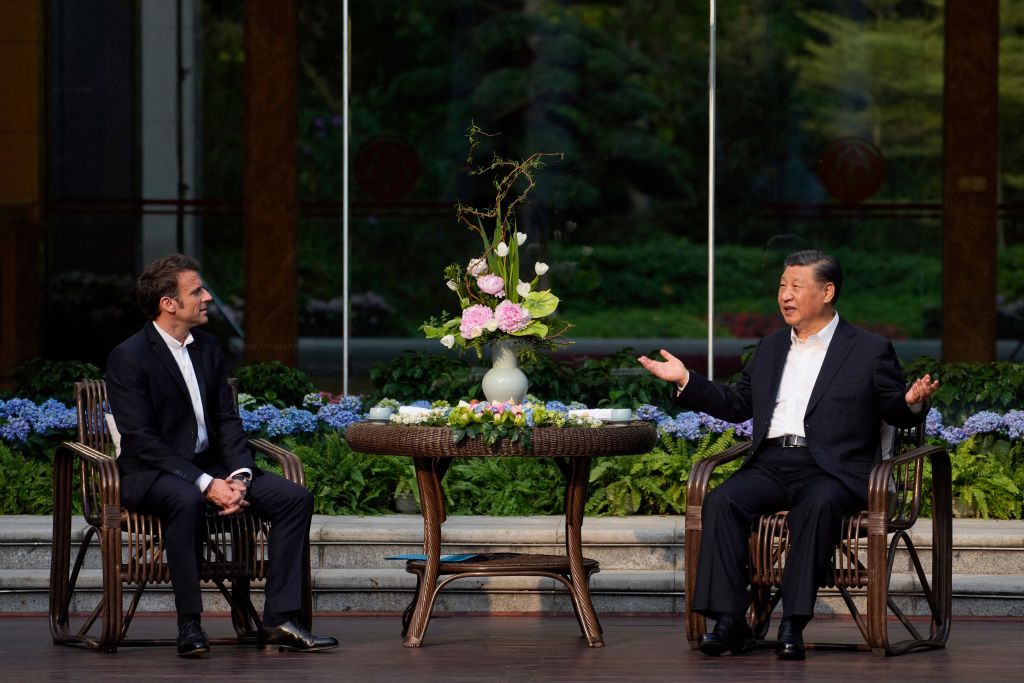
Macron and Xi at the Guandong province governor's residence in Guangzhou on 7 April (Thibault Camus/AFP via Getty Images)

The most-reported snippets of Macron’s interview are his statements that Europe should not “take our cue from the US agenda and a Chinese overreaction”, and that Europe risks become one of “America’s followers”. Translation is a fickle thing, and this rendering of French into English can reasonably be disputed.

In this case it is best to refer to the full interview, published in Les Echos, rather than the quotes used in the Politico piece. This is not to say, as some have suggested, that Politico was intending to distort Macron’s words. This is not a case of “what did the President actually say?” Reading his interview in its entirety simply provides more context.

The context being that these remarks represent nothing more or less than a continuation of the policy approach that Macron laid out months after becoming President at a speech to the Sorbonne in September 2017.

Here is a quote from that earlier speech:

It is by constantly articulating the driving ambition of a few and respecting everyone’s pace that we will create the desire to move forward, and that Europe will progress for the benefit of all.

Now take the full quote of Macron’s statement about Taiwan from the recent interview:

Do we have an interest in an acceleration over the subject of Taiwan? No. The worst choice would be to think that we, Europeans, must be followers on this subject, and adapt ourselves to an American pace and a Chinese overreaction. Why should we go at the rhythm chosen by others?

Speaking in the Netherlands, Macron has since reiterated this view, while also stating in clear terms that both France and Europe supports the status quo situation with regard to Taiwan.

Should we begrudge a country for wanting to contribute in its own way to the prevention of a major crisis in the Indo-Pacific?

Not only is Macron displaying continuity over a nearly six-year period, but his seems a reasonable point. Reflecting on the conversations that have been had recently in Australia about sovereign decision-making, why should we begrudge a country for wanting to contribute in its own way to the prevention of a major crisis in the Indo-Pacific?

Macron certainly expressed himself in a colourful and typically Francophone way – other than Scott Morrison’s brief dalliance with International Relations theory, you’d be hard-pressed to remember an Australian PM talking about events in international affairs “from a Gramscian perspective”. But the reaction to Macron’s comments has also been typically – and disappointingly – Anglophone.

The French President’s statements are not some kind of Munich-lite appeasement speech, as former UK prime minister Liz Truss suggests. Nor can any one leader can speak for all members of the European Union. Macron’s comments were an expression of existing French policy.

The idea of a trading bloc the size of the European Union acting to balance against the potential aggression of a rising China should be greeted with interest and engagement. Unlike Australia, which until recently believed it could reasonably not make a choice between the United States and China, the EU’s economic heft make it far more able to do just this.

Macron’s government understands that a crisis in Asia would affect Europe. The French Indo-Pacific Strategy, unveiled by Macron at Sydney’s Garden Island in 2018, and updated in 2022, makes this point in its first pages. And the French military presence of more than 8,000 soldiers stationed in the Indo-Pacific, from Réunion to French Polynesia, is, of course, far higher a number than partners in London appear capable of providing.

Undoubtedly, world leaders should be careful about what they say, when, and how they say it. Yet as Foreign Minister Penny Wong has said, talking to China is good. Asserting that a war over Taiwan is in no one’s interest is correct. Deterrence can be an effective way of preventing war, but major arms races between superpowers have rarely ended peacefully.

Recent Australian governments of both persuasions have talked about welcoming like-minded engagement in the region. After reading the commentary of the last few days, you have to wonder if that only means minds that think in English.

Adblock test (Why?)

First LEGO Marvel Visual Dictionary minifigure revealed - Brick Fanatics - Dictionary

The exclusive minifigure in the first-ever LEGO Marvel Visual Dictionary has been confirmed as the final version of the book’s cover surfaces. 

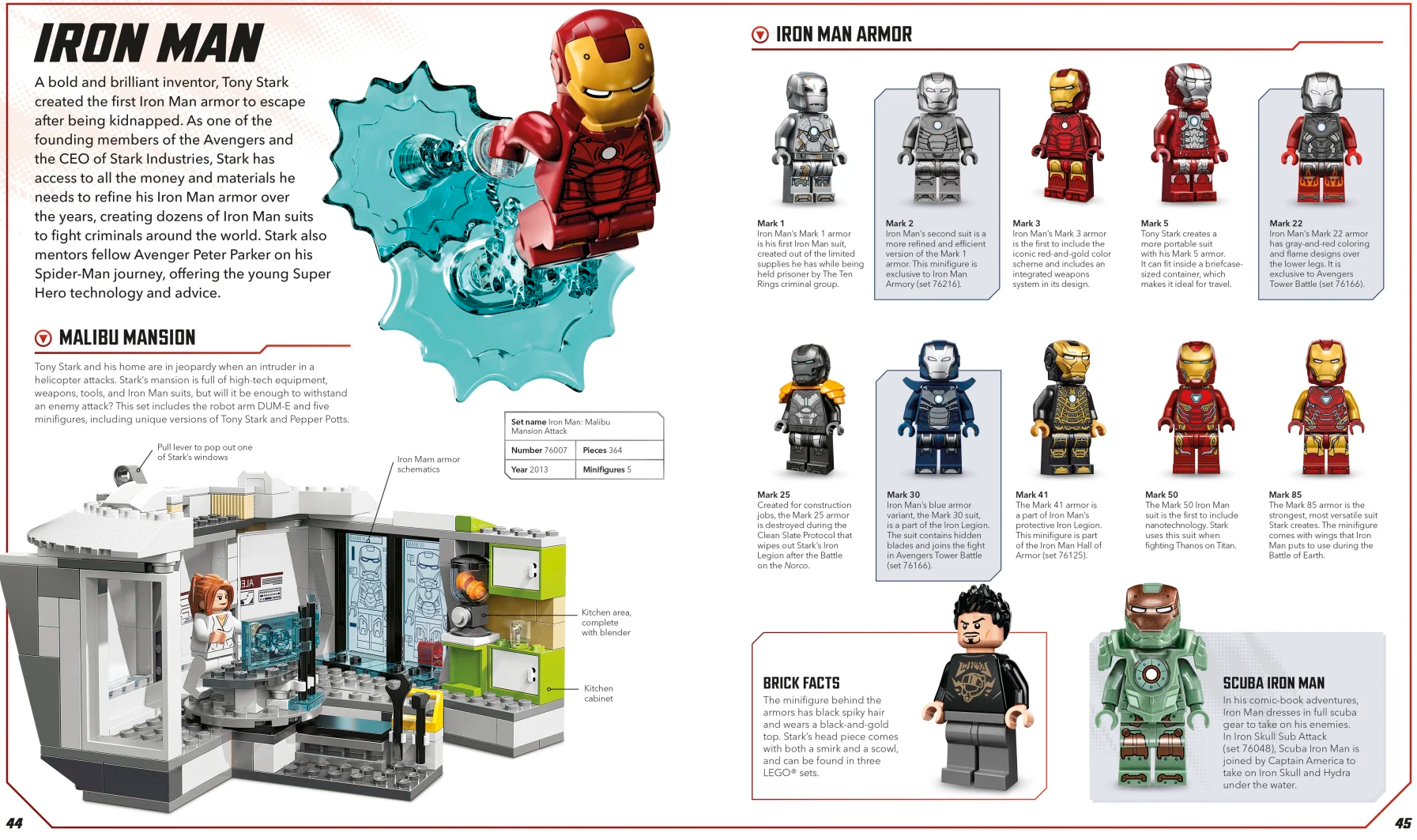
Now officially revealed on the DK website, the exclusive minifigure in the first LEGO Marvel Visual Dictionary has been confirmed as a new Iron Man suit – close to one of our initial predictions. 

LEGO Marvel visual dictionary cover 2

While the description does not clarify whether this is the exclusive minifigure confirmed for the title, it seems unlikely that the cover of the book would not advertise the exclusive minifigure and this is undoubtedly a new Iron Man minifigure. 

This appears to be based on the Model 64 suit from the Tony Stark: Iron Man comic series in 2019. 

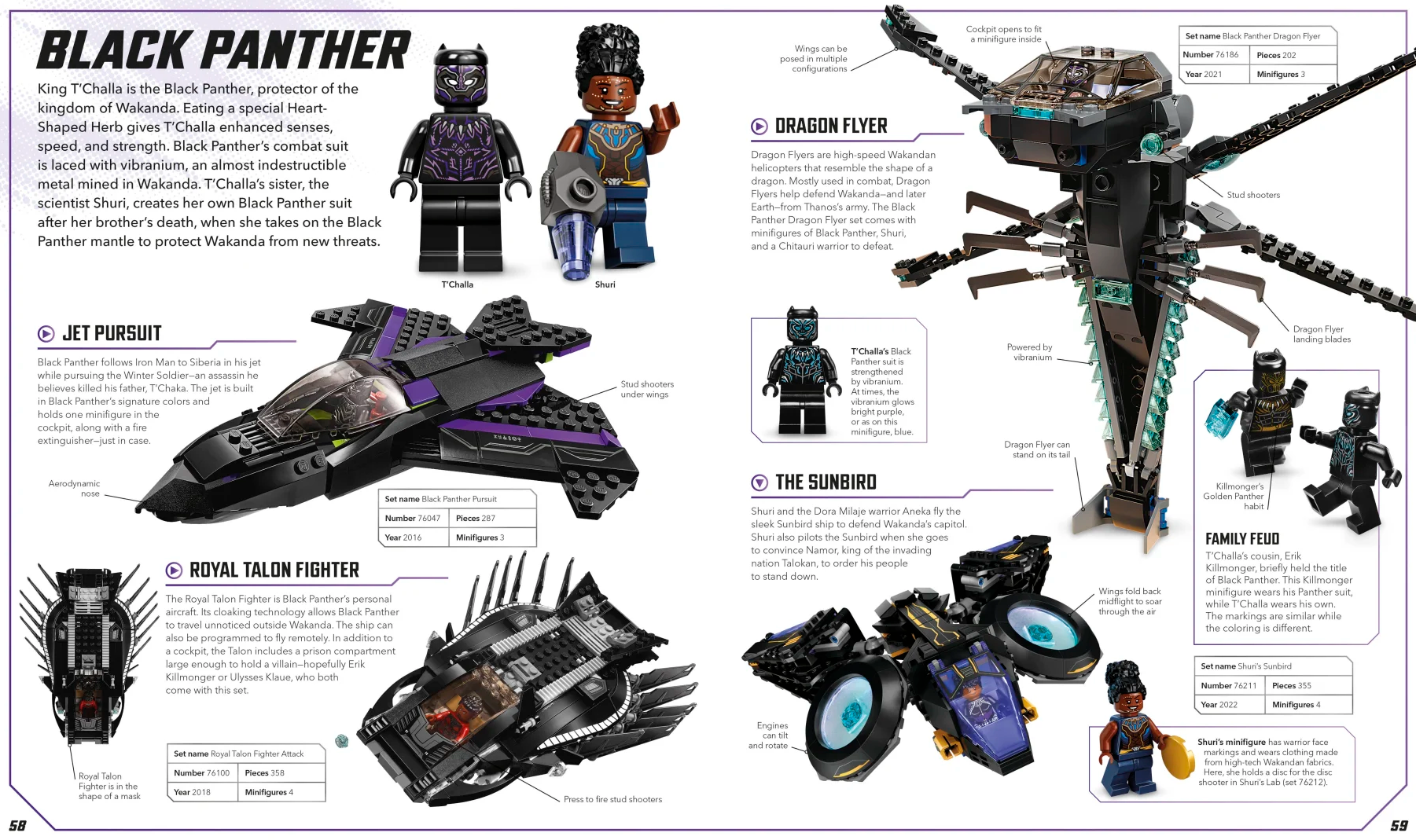
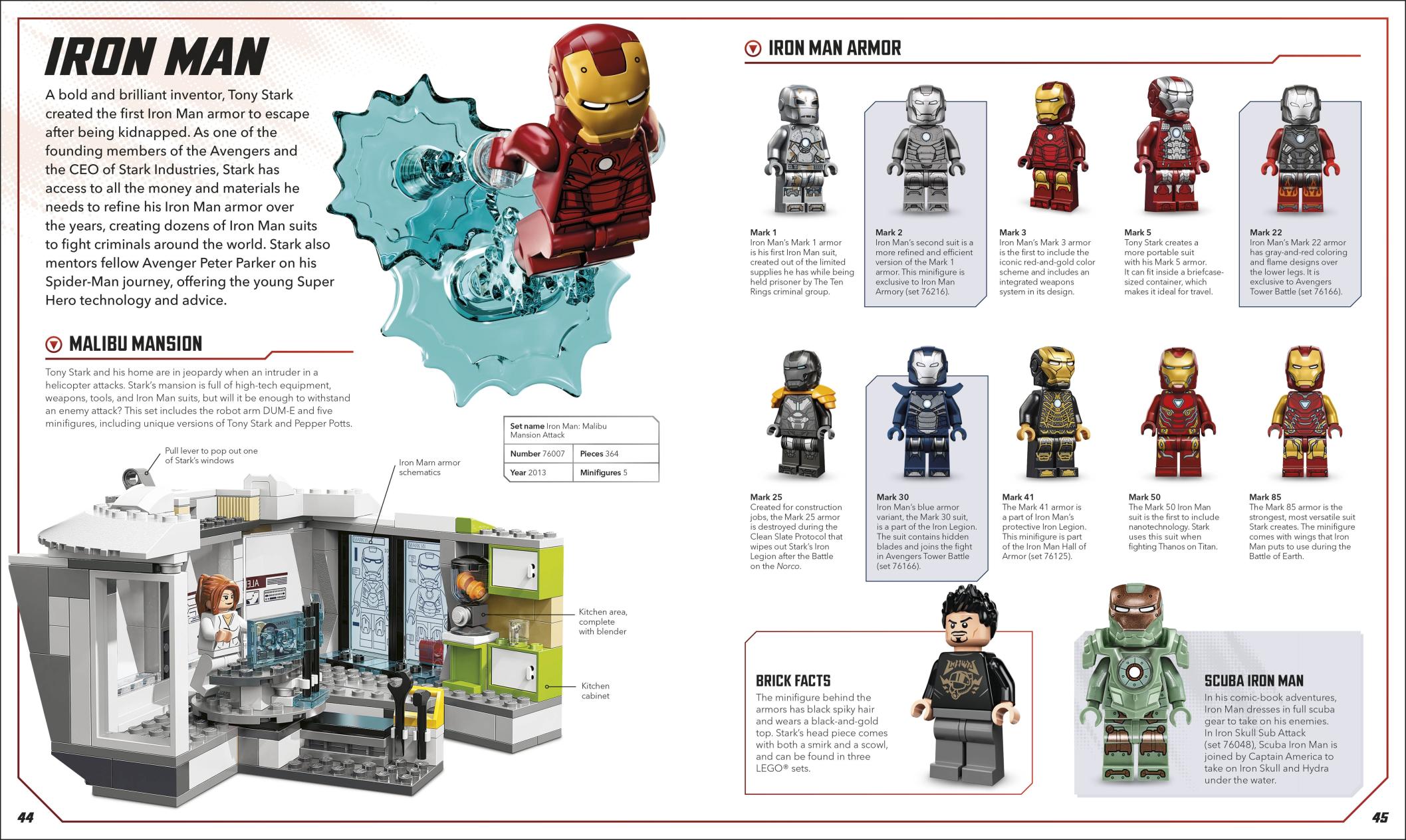
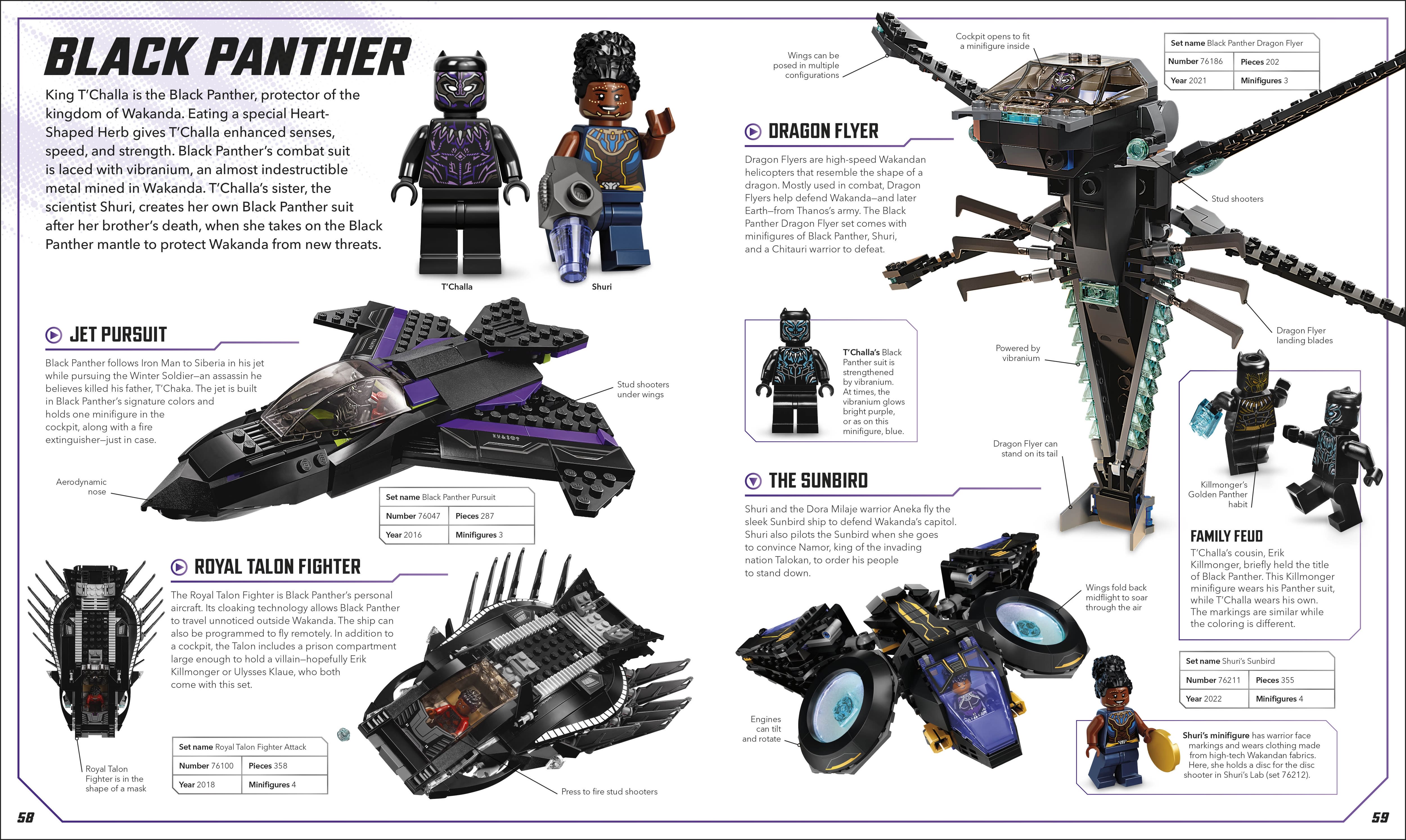
The listing also includes a look at a few of the pages inside the book, confirming that the LEGO Marvel Visual Dictionary will cover sets, minifigures and even buildable figures. 

The first LEGO Marvel Visual Dictionary will be available for $24.99 from September 19, 2023. Also coming later this year is a new edition of the LEGO Harry PotterCharacter Encyclopedia with an exclusive Rita Skeeter minifigure.

Support the work that Brick Fanatics does by purchasing your LEGO sets using our affiliate links.  

Adblock test (Why?)

Friday, April 14, 2023

LEGO Marvel Visual Dictionary Updated Cover - New Iron Man Model 64 Minifigure - The Brick Fan - Dictionary

DK has updated the cover for the upcoming LEGO Marvel Visual Dictionary and it looks like we’ll be getting an exclusive Iron Man minifigure. It is said to be based on Iron Man Armor Model 64 from 2019’s Tony Stark: Iron Man #14. Pre-orders for the 160 page book are still not open yet it is listed for a September 19 release.

Adblock test (Why?)

17 beautiful foreign words that have no English translation - indy100 - Translation

There are plenty of foreign words we use in English because they lack a proper translation.

Aloha for instance is a Hawaiian word that has spread overseas and is used as a greeting, but the word literally translates as: "breath of presence".

Dr Tim Lomas is a psychologist at the University of East London who has been investigating how positive feelings and well-being are expressed in other languages.

In a paper for the Journal of Positive Psychology, Dr Lomas described the aims of his research:

"First, it aims to provide a window onto cultural differences in constructions of well-being, thereby enriching our understanding of well-being. Second, a more ambitious aim is that this lexicon may help expand the emotional vocabulary of English speakers (and indeed speakers of all languages), and consequently enrich their experiences of well-being."


The paper is the end result of the Positive Lexicography Project which is an online glossary of hundreds of untranslatable words, and the list is still growing.

Dr Lomas stresses that the list is a work in progress. They're words and phrases that are used in a positive sense (happiness, joy, skill, relationships). The feelings and situations described are often immediately recognisable as something positive yet only one language has created a single word for these universal emotions.

Here are some of our favourites:

Abhisar (अभिमान)

(Bengali, n.): lit. 'going towards'; a meeting (often secret) between lovers / partners.

Chai pani (चाय पानी)

(Hindi/Urdu, n.): lit. 'tea and water'; favours or money given to someone to get something done (similar to a 'bribe', but without a negative connotation).

Cwtch

(Welsh, n.): to hug, a safe welcoming place.

Fjellvant

(Norwegian) (adj.): Being accustomed to walk in the mountains.

Gumusservi

(Turkish, n.): the glimmering that moonlight makes on water.

Kvell

(Yiddish, v.): to feel strong and overt (expressed) pride and joy in someone's successes.

Mерак

(Serbian, n.): pleasure derived from simple joys.

Morgenfrisk

(Danish, adj.): feeling rested after a good night's sleep.

Nakama (仲間)

(Japanese, n.): best friend, close buddy, one for whom one feels deep platonic love.

Samar (سمر)

(Arabic, v.): to sit together in conversation at sunset/ in the evening.

Sólarfrí

(Icelandic, n.): sun holiday, i.e., when workers are granted unexpected time off to enjoy a particularly sunny/warm day.

Sprezzatura

(Italian): nonchalance, art and effort are concealed beneath a studied carelessness.

Sobremesa

(Spanish, n.): when the food has finished but the conversation is still flowing.

Suaimhneas croi

(Gaelic, n.): happiness / contentment on finishing a task.

Toska (тоска)

(Russia, n.): longing for one’s homeland, with nostalgia and wistfulness.

Waldeinsamkeit

(German, n.): mysterious feeling of solitude when alone in the woods.

Whakakoakoa

(Māori, v.): to cheer up.

For the full lexicography see Dr Lomas' site here.

Have your say in our news democracy. Click the upvote icon at the top of the page to help raise this article through the indy100 rankings.

Adblock test (Why?)

Anti-LGBTQ threats to Massachusetts-based dictionary publisher land man a year in prison - Boston.com - Dictionary

Adblock test (Why?)

Threats to dictionary publisher land man a year in prison - Yahoo Finance - Dictionary

A California man who made violent anti-LGBTQ-related threats against dictionary publisher Merriam-Webster Inc. over its updated gender definitions was sentenced Thursday to a year in prison.

The sentence imposed on Jeremy Hanson, 35, by a federal court in Massachusetts also included 30 days of home confinement, three years of probation and mental health treatment.

Hanson pleaded guilty last year to interstate transmission of threatening communications in connection with threats made to the Springfield, Massachusetts-based dictionary publisher and to the president of the University of North Texas.

In court documents, prosecutors said the Rossmoor, California, man has a history of making “threatening communications, nearly all of which were motivated by ... biases based upon race, gender, gender identity, and/or sexual orientation.”

Those other communications were directed at the American Civil Liberties Union, Amnesty International, Land O’ Lakes Inc., Hasbro, a nonbinary rabbi and others, prosecutors said.

In a remote hearing Thursday, prosecutor Steven Breslow asked for an 18-month prison sentence, in part to serve as a deterrent to others at a time when violent rhetoric is becoming more common.

Hanson’s defense attorney, Marissa Elkins, asked that her client be sentenced to the time he has already served, citing his history of emotional and behavioral issues, including anxiety and obsessive-compulsive disorder.

More time behind bars could negatively affect his mental health, she said.

Judge Mark Mastroianni in U.S District Court in Springfield acknowledged Hanson's medical history and said he had no intent or capacity to carry out his threats, but called his actions “disturbing and terrifying.”

He noted that Merriam-Webster management was “fearful that Hanson would come to their office and cause harm,” and said internal company communications referenced the 2015 attack on Charlie Hebdo offices in France, where terrorists killed 12 people who worked for the satirical weekly newspaper.

Hanson sent Merriam-Webster threatening messages and comments between Oct. 2 and Oct. 8, 2021 using the website’s “contact us” function, where he commented on word entries such as “girl,” “woman,” and “female,” prosecutors said.

“It is absolutely sickening that Merriam-Webster now tells blatant lies and promotes anti-science propaganda,” Hanson wrote, according to prosecutors. “There is no such thing as ‘gender identity.’ The imbecile who wrote this entry should be hunted down and shot.”

Twice he threatened to shoot and bomb company headquarters, prompting Merriam-Webster to close offices in Springfield and New York City for several days, prosecutors said.

Hanson also wrote an email to the president of the University of North Texas in 2022 that said “You ought to be shot in the head and have your offices set on fire," for supporting transgender students, prosecutors said.

Hanson, who appeared at the hearing remotely from a California jail, declined to address the court when given the opportunity.

Adblock test (Why?)