Sunday, October 17, 2021

Squid Game: why you shouldn't be too hard on translators - The Conversation UK - Translation

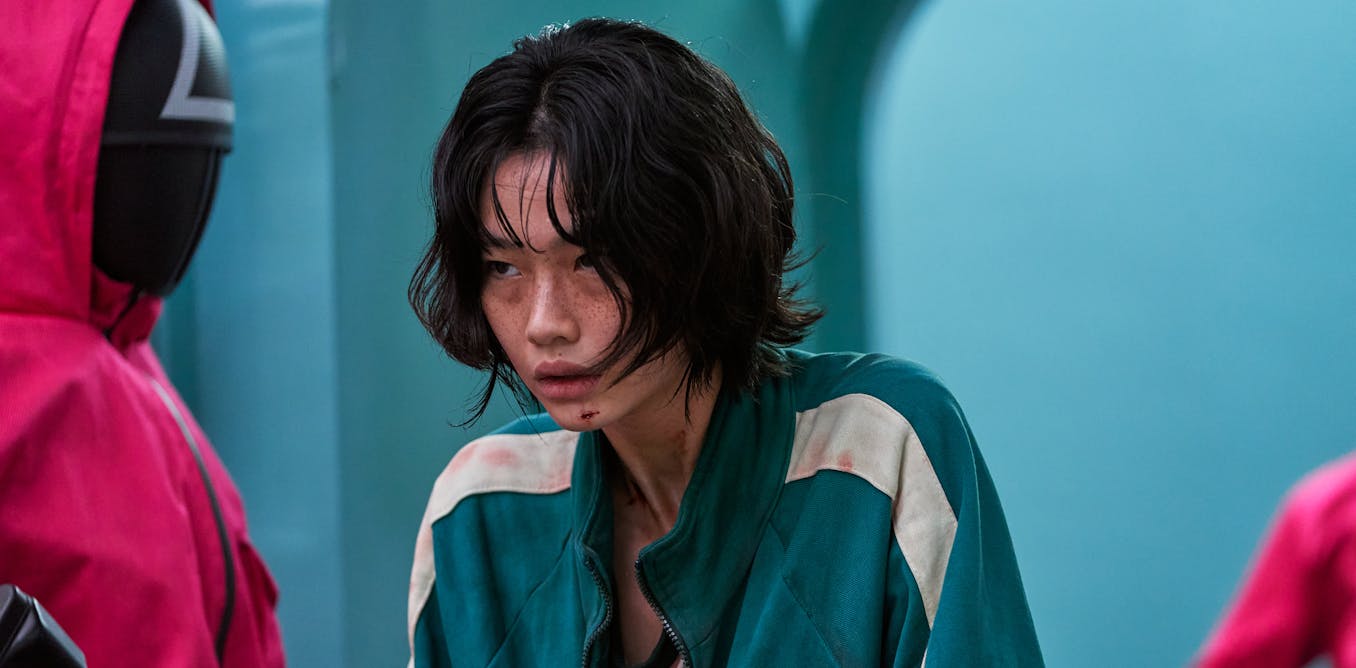
Squid Game has recently become Netflix’s biggest debut ever, but the show has sparked controversy due to its English subtitles. This occurred after a Korean-speaking viewer took to Twitter and TikTok to criticise the subtitles for providing a “botched” translation, claiming: “If you don’t understand Korean you didn’t really watch the same show.”

Only this year, Squid Game, Lupin, and Money Heist – all non-English originals – have consistently been at the top of Netflix’s most-watched shows globally. This growing popularity of productions in languages other than English and streaming platforms investing more in them has led to an increase in the visibility of the work of translators.

When it comes to translating films and series, subtitling and dubbing are the most common forms of translation. Subtitles show the dialogue translated into text displayed at the bottom of the screen; while in dubbing, the original voices of the characters are replaced with voices in a new language.

Translation is not new to viewers, but the instant, almost frictionless access to different language versions of the same film or show definitely is. Streaming platforms allow viewers to swiftly change from watching a film with subtitles to listening to the dubbed version or the original. This creates an opportunity for viewers to compare the different versions.

Why do originals and translations differ?

Just because the translation doesn’t say exactly the same as the original, it doesn’t mean it’s wrong. Films and TV series are packed with cultural references, wordplay and jokes that require changes and adaptation to make sure what’s said and seen on screen makes sense across languages.

Making allowances and adapting what’s said are common practices in translation because, otherwise, the translators would need to include detailed notes to explain cultural differences.

Consider the representations of washoku (traditional Japanese cuisine) which are so beautifully embedded in Studio Ghibli films. While additional explanations about the significance of harmony, kinship and care represented in the bowls of ramen in Ponyo or the soft steaming red bean buns in Spirited Away could be interesting, they might get in the way of a viewer who just wants to enjoy the production.

Professional translators analyse the source content, understand the context, and consider the needs of the variety of viewers who will be watching. They then look for translation solutions that create an immersive experience for viewers who cannot fully access the original. Translators, similarly to screenwriters and filmmakers, need to make sure they provide good, engaging storytelling; sometimes that implies compromises.

For instance, some original dialogue from season two of Money Heist uses the expression “somanta de hostias”. Literally, “hostia” means host – as in the sacramental bread which is taken during communion at a church service. But it is also Spanish religious slang used as an expletive.

Original: Alberto, como baje del coche, te voy a dar una somanta de hostias que no te vas ni a mantener en pie.

Literal translation: Alberto, if I get out the car, I’m going to give you such a hell (hostia) of a beating that you won’t be able to stay on your feet.

Dubbed version: If I have to get out of the car, I’m gonna beat you so hard you don’t know what day it is.

Subtitles: Alberto, if I get out of the car, I’ll beat you senseless.

The dubbed version of the dialogue adopts the English expression “to beat someone”. The subtitled version uses the same expression but offers a shorter sentence. The difference between the two renderings reflects the constraints of each form of translation.

In dubbing, if the lip movements don’t match the sound, viewers often feel disconnected from the content. Equally, if subtitles are too wordy or poorly timed, viewers could become frustrated when reading them.


Read more: Squid Game: the real debt crisis shaking South Korea that inspired the hit TV show


Dubbing needs to match the duration of the original dialogue, follow the same delivery to fit the gesticulations of the characters, and adjust to the lip movements of the actors on the screen. Subtitles, on the other hand, need to be read quickly to keep up with the pace of the film. We talk faster than we can read, so subtitles rarely include all the spoken words. The longer the subtitle, the longer the viewer will take to read it and the less time they will have to watch. According to Netflix policies, for example, subtitles can’t have more than two lines and 42 characters, and shouldn’t stay on the screen for longer than seven seconds.

Additionally, in the above example, the translations do not reflect the reference to religious slang, typical of Spanish culture. Rather than fixating on this reference and assuming it is an essential part of the dialogue, a good translator would consider what an English-speaking character would say in this context and find a suitable alternative that will sound natural and make sense to the viewer.

New rules of engagement

It is encouraging to see that some viewers are so devoted to the content they watch: foreign films and TV shows help promote cultural understanding and empathy. But not all viewers act in the same way and the solutions provided by the translators need to cater to everyone who decides to watch the show.

This leads to different viewing experiences, but it only reflects the reality of watching any culturally charged product, even in our own languages. In English, for instance, consider all the references and nuances that a British viewer could miss when watching an English-language film produced in South Africa, Jamaica or Pakistan.

Translators do not blindly look for literal translations. On the contrary, in the translation profession, hints of literal translation often signal low-quality work. Translators focus on meaning and, in the case of films and series, will endeavour to provide viewers with a product that will create a similar experience to the original.

The case of Squid Game has been instrumental in bringing discussions about translation to the fore. Of course there are good and bad translations, but the main gain here is the opportunity to debate what determines this. Through such discussions, viewers are becoming more aware of the role and complexities of translation.


Adblock test (Why?)

Squid Game: Have Korean nuances of Netflix's Squid Game been lost in translation with English subtitles? - The Scotsman - Translation

Lost in 'Squid Game' translation - Korea Times - Translation

By Jason Lim

All the controversy around the translation of "Squid Games" got me thinking, for the first time in a long time, about how things really do get lost in translation. As a Korean American who's bicultural, I have been interpreting and translating my share of Korean-English for the last 20 years plus, albeit not professionally.

So, I took a natural interest when I saw how the English translation of some of the Korean linguistic features in "Squid Game" triggered an international debate. Indeed, I also came across some points of language that I thought could have been conveyed better. For example, I think using "disqualified" instead of "eliminated," for when a contestant fails and is shot is a more accurate translation. It also conveys the sense of ironic euphemism that informs the original Korean expression.

Having said that, I truly appreciate the art form that Korean-English translation can be. Translation is a recreation of the language arts, not a mechanical transcription. You have to convey a meaning that's necessarily couched within a localized and era-sensitive context. Language is an invisible bridge that connects the speaker to the audience inside a specific and defined sociocultural proximity. Translation and interpretation attempt to recreate that bridge with a different audience that's not within the same cultural geography. Especially with subtitles, this has to be done under the restriction of character limit and formatting constraints.

I came across a "Squid Game" meme that speaks to this more eloquently than I ever could. It's about how Han Min-yeo's character uses the term "oppa" in nuanced ways. Oppa, in its most basic form, is a word that a younger female sibling would use to address her older male brother. However, the use of this term has morphed in so many different ways in South Korean society that it can mean a client, customer, boy band member, boyfriend, male friend, etc., depending on who and to whom the term applies in what social context, regardless of age. In "Squid Game," Han is almost weaponizing the term with charm, cynicism, double entendre and wit to manipulate the interpersonal and group dynamics that optimize her chances of survival. But try saying all that in a subtitle. By the way, talking about double entendres, Han Min-yeo also translates as, "One Beautiful Woman." So, every time she is called by her name, that meaning is conveyed.

This isn't anything new. Every language contains words like "oppa" that are impossible to translate and maintain the full complexity and personality of each term within a specific context. For some insight and comedic relief, look up the different ways that native English speakers use the word "sh*t." Translating oppa is easier.

Therefore, the criticism about the subtitle or dubbing translation of "Squid Game" into English is missing the point. With its massive success, "Squid Game" has already proven that its appeal cuts across cultures and delivers meaning that can self-localize to cultures that are vastly different from one another. Numbers don't lie. According to Netflix, over 111 million people watched it globally within 25 days of its release.

Maybe that's the whole point of translation, especially of works of art. As long as the foundational dynamics and lessons underlying the storyline are conveyed, translating every single esoteric nuance of the original language isn't necessary. Nay, it could even be a distraction to the overall flow of the story. Also, you run the risk of turning the work into something that's so thick and rigid that it doesn't brook any flexibility for the audience to localize it in relation to their own experiences.

Of course, the kind of translation I am talking about isn't on par with the interpretation involved in negotiations between the U.S. and North Korea. In those cases, the interpreter has to be strictly literal, even using the wrong or inappropriate words if that's what the original speaker used. However, in most cases, translation or interpretation should be about placing the dots in positions that generally resemble the original pattern but lets the audience connect them in a way that makes the most sense to their individualized situations. If you connect the dots in premeditated ways that cannot be changed, you are robbing the audience of the chance to make the work their own, since they can't engage with something if they can't move within and around it. Freedom of narrative movement is what creates personalized meaning in stories.

Much of the criticism over translation of "Squid Game" is accurate but also nitpicking. In a way, I also believe that it comes from a place of pride. By that, I mean that the Korean critics are immensely proud that a homegrown TV series has struck such a nerve globally and want to make sure that the larger audience gets every subtle, clever and deep connotation behind the artistic choices of the wonderful script. But art is successful only when it becomes personally relatable, and that can only happen in between the spaces of its interpretation. Trying to impose only a single, correct way for art to be enjoyed makes it no longer art; it becomes a chore.
Jason Lim (jasonlim@msn.com) is a Washington, D.C.-based expert on innovation, leadership and organizational culture.

Adblock test (Why?)

Squid Game: Why you shouldn't be too hard on subtitle/dubbing translators - Rappler - Translation

Dubbing needs to match the duration of the original dialogue, follow the same delivery to fit the gesticulations of the characters, and adjust to the lip movements of the actors on the screen. Subtitles, on the other hand, need to be read quickly to keep up with the pace of the film. We talk faster than we can read, so subtitles rarely include all the spoken words. The longer the subtitle, the longer the viewer will take to read it and the less time they will have to watch. According to Netflix policies, for example, subtitles can’t have more than two lines and 42 characters, and shouldn’t stay on the screen for longer than seven seconds.

Adblock test (Why?)

Saturday, October 16, 2021

MATSON | Industry-specific language is often lost in translation - Manhattan Mercury - Translation

When I toiled in the vineyards of television news, often among my duties was the recording of the video news feed from the network.

During finite periods of time (generally later afternoon, about an hour before local news broadcasts), via closed circuit, the network, in this case, CBS, would offer fresh video material to the affiliates to slice/dice and/or cut/paste as they saw fit to fill holes in their pending local broadcasts.

Very often, a specific piece from the network was not quite ready. On those occasions, these character generated words would appear on screen:

“Efforting… keep tape at speed.”

That last part meant if you waited to start recording until the video was finally sent, you were out of luck, since given of the foibles of the state-of-the-art technology of the day, it took a few seconds for the physical tape in your video recorder to actually get up to recording speed.

If your tape was not at speed, the first few words of audio would sound like HAL 9000 singing “Daisy” as Dave Bowman methodically set about unscrewing his Plexiglas innards.

“Efforting,” meant just that.

It meant those poor, underpaid, overworked network schlubs on the sending end were busting their humps during this finite period of time to get this video finished and out to us poor, underpaid, overworked schlubs on the affiliate station receiving end.

(Schlub yin/yang).

To make an already long story short (I guess actually, it’ll make it longer, sorry), today when someone asks me for the random status update, I’ve been known, on occasion, to respond, “Efforting. Keep tape at speed.”

This is often greeted by a quizzical look, accompanied, no doubt, by one of these two thoughts:

A. No clue what he’s talking about, but I suspect it’s a dated reference.

B. He doesn’t have what I want.

All of which led me to ponder the shelf-life of words, phrases and cultural linguistic shorthand. Some of which I grow increasingly weary:

“At the end of the day…”

“It is what it is…”

“To be transparent…” (We used to call this “being honest.”)

“Reaching out…” (This used to be known as “gimme a call.”)

“Going forward…”

Another one that grates on my linguistic expectations is what I consider sportscasters’ misuse of the word, “scuffling.” “Santana’s been scuffling a bit as of late…” Huh? I thought “scuffling” meant fighting or scrapping but lately, it’s used as though it means, “struggling.”

Maybe there’s a new definition I’m not aware of. But since I looked it up in the Urban Dictionary, I tend to think not.

And my new all-time recent fave,

“I know, right?”

Lest we forget the words and phrases which seem unique to each generation, mine included. Then we say them out loud in the presence of others.

And our offspring just look at us and sigh. Us late wave boomer can lay claim to these pearls:

“Get down,” “bodacious,” “right on,” “boogie,” “booking” (as in going fast).

Which reminds me of the time in the television news vineyard toiling years when a colleague and I booked into Sonic in Junction City for a late lunch because we were in a hurry (no doubt to be back to Topeka to get the tape up to speed by 4 p.m.)

After a burgerless 15 minutes, I re-punched the red button and offered,

“Yo! What’s the status of those burgers?”

The reply was something to the effect of, “Doin’ the best we can in here.”

Clearly the Sonic equivalent of “Efforting. Keep tape at speed.”

Mike Matson’s column appears every other Sunday in The Mercury. Follow his blog at mikematson.com

Adblock test (Why?)

National Dictionary Day: Surprising facts about the resource book - Fox News - Dictionary

Saturday is National Dictionary Day and what better way to celebrate than to learn a few facts about the resource book? 

The U.S. celebrates National Dictionary Day on Oct. 16 every year in honor of the birthday of Noah Webster, considered to be the father of the American dictionary, according to Merriam-Webster.

According to the dictionary website, National Dictionary Day "celebrates language, emphasizes the importance of learning and encourages readers to use the dictionary to improve vocabulary."

Saturday is National Dictionary Day. The U.S. celebrates the holiday on Oct. 16 every year in honor of Noah Webster’s birthday. Webster is considered the father of the American dictionary. (iStock)

Saturday is National Dictionary Day. The U.S. celebrates the holiday on Oct. 16 every year in honor of Noah Webster’s birthday. Webster is considered the father of the American dictionary. (iStock)

The website offers some ways to celebrate, including playing word games like crossword puzzles or word searches, hosting a spelling bee or learning a new word. 

You can also celebrate by reading these interesting facts about the dictionary. 

RARE US CONSTITUTION COPY UP FOR AUCTION EXPECTED TO FETCH $15M

The first English language dictionary was created in 1604

Robert Cawdry released "A Table Alphabeticall" in 1604, making it the "first single-language English dictionary ever published," according to the British Library. The resource book had about 3,000 words and "simple and brief descriptions."

The first English language dictionary was released in 1604 and the first American dictionary was published in 1806. (iStock)

The first English language dictionary was released in 1604 and the first American dictionary was published in 1806. (iStock)

The first American dictionary – "A Compendious Dictionary of the English Language" – was published in 1806 by Noah Webster, according to the Merriam-Webster website.

In 1828, Webster published "An American Dictionary of the English Language," which had 70,000 entries.

CLICK HERE TO GET THE FOX NEWS APP 

No English dictionary contains every word in the English language

According to Merriam-Webster, it’s silly to rely on any single dictionary to contain every word in the English language, even though dictionaries "tend to be rather large books."

"There has never been, and never will be, a dictionary that includes all the words in English," Merriam-Webster said on its website. 

According to the dictionary, some dictionaries leave out words that are out of date or irrelevant to most people. 

Pneumonoultramicroscopicsilicovolcanoconiosis is generally understood to be the longest word in the English language, with 45 letters. (iStock)

Pneumonoultramicroscopicsilicovolcanoconiosis is generally understood to be the longest word in the English language, with 45 letters. (iStock)

Words aren’t decided by lexicographers

According to the Merriam-Webster website, different dictionaries have various criteria for adding words. However, the general rule for adding or removing a word from the dictionary depends on data surrounding how often a word is used.

"If enough people use a certain word in a certain way for a certain length of time (or if it has substantial currency in a particular field, such as medicine) it will be added to a dictionary," Merriam-Webster writes on its website.

CLICK HERE TO SIGN UP FOR OUR LIFESTYLE NEWSLETTER 

The longest word in the English language has 45 letters

Pneumonoultramicroscopicsilicovolcanoconiosis is generally understood to be the longest word in the English language, with 45 letters. The word refers to a lung disease, according to Lexico.

Other words considered to be among the longest in the dictionary are antidisestablishmentarianism (a 28-letter word referring to the "opposition to a breaking away from an established church," according to Dictionary.com) and floccinaucinihilipilification (a 29-letter word meaning "the estimation of something as valueless," according to Dictionary.com).

Eunoia, which means "beautiful thinking" according to Guinness World Records, is the shortest word in the English language that has all five main vowels. (iStock)

Eunoia, which means "beautiful thinking" according to Guinness World Records, is the shortest word in the English language that has all five main vowels. (iStock)

FOLLOW US ON FACEBOOK FOR MORE FOX LIFESTYLE NEWS

The shortest word with all five vowels in the English language is just 6 letters

Eunoia, which means "beautiful thinking" according to Guinness World Records, is the shortest word in the English language that has all five main vowels. 

Of course, the two shortest words in the entire English language are "I" and "a", with just one letter each. According to Lexico, there are 103 two-letter words.

Adblock test (Why?)

Today is a perfect time to think about dictionaries - The San Diego Union-Tribune - Dictionary

Today is National Dictionary Day, traditionally celebrated on the birthday of Noah Webster (1758-1843), who, in 1806, gifted our young nation with his Compendious Dictionary of the English Language, the first great American dictionary. The occasion inspires me to share this letter, along with my response:

DEAR RICHARD: Reading the preface in Eley Williams’ book The Liar’s Dictionary, I came across this confection: “Whether a dictionary should register or fix the language is often toted as a qualifier. Register, as if words were so many delinquent children herded together and counted in a room; fix, as if only a certain number of children are allowed access to the room, and then the room is filled with cement.” I gather from your writings that you champion the former position. Does that make you a registrant? —Rich Olcott, Coronado

Yes, I am a registrant — a descriptivist who believes that all words shared by a variety of speakers and writers should repose in the dictionary. At the same time, I believe that a dictionary should indicate that some words in its pages should be flagged as “nonstandard.” In short, people influence dictionaries, and dictionaries influence people.

***

The San Diego Union-Tribune’s Successful Aging Expo Online returns Oct. 23-30. This fall’s interactive online event offers free admission with a simple registration for all attendees. Celebrating its 12th year, the event will showcase local businesses and services that cater to active older adults, plus a full slate of expert speakers. Presented on an easy-to-navigate online platform, the event brings the audience seminars and demonstrations that include both serious and lighthearted topics. All seminars and exhibitor booths, including mine, are available for viewing on-demand every day throughout the run of the event so that attendees may enjoy visiting at their own convenience.

DEAR RICHARD: One trite comment that raises my hackles is “I would like to take this opportunity to thank this person for...” If you would like to, then don’t tell us what you would like to do, do it, as in: “I am happy to thank this person for...” —Bill White, Mission Valley

At my speaking engagements, hosts often lead off with “I would like to introduce Richard Lederer.” Similar to Bill White’s response, I think, “Of course you would like to introduce me, so get on with it!”

DEAR RICHARD: Years ago, Lakers owner Jerry Buss bought a piece of property in Los Angeles (I am not making this up) that was previously owned by actors Douglas Fairbanks Jr. and Mary Pickford. The estate was known as “Pickfair.” So, ever the comedian, I had to ask, “Does he plan to call it “Bussfare”?

Also: At the 1994 Winter Olympics, in Lillehammer, Norway, a cute American girl, Picabo Street, showed up and walked off with multiple skiing medals. She was quite generous with the money she made from celebrity endorsements and funded a Sports Medicine Center at a hospital in her home town. I observed that she missed a great opportunity! She could have given the money to an Intensive Care Unit, so they could have named it after herself: The PeekABoo ICU. —Mary Jo Crowley, Escondido

DEAR RICHARD: This was a question on “Jeopardy!” that I saw as a child many, many years ago: An eight-letter word with only a single vowel! I loved that clue and never forgot that the answer was: “What is strength?” —Deborah Lessard, Spring Valley

Actually there’s a longer such word: strengths, as in “strengths and weaknesses.”

* * *

How many nouns can you think of that, instead of adding a suffix, as in cats and dogs, become plural by changing internal vowels? Answers repose at the end of this column. Clue: two kinds of people, three animals and two body parts.

* * *

In Moon Tiger Penelope Lively wrote: “We open our mouths and out flow words whose ancestries we do not even know. We are walking lexicons. In a single sentence of idle chatter we preserve Latin, Anglo-Saxon, Norse: we carry a museum inside our heads, each day we commemorate peoples of whom we have never heard.”

* * *

Answers: man-men, woman-women; goose-geese, mouse-mice, louse-lice; foot-feet, tooth-teeth.

Adblock test (Why?)